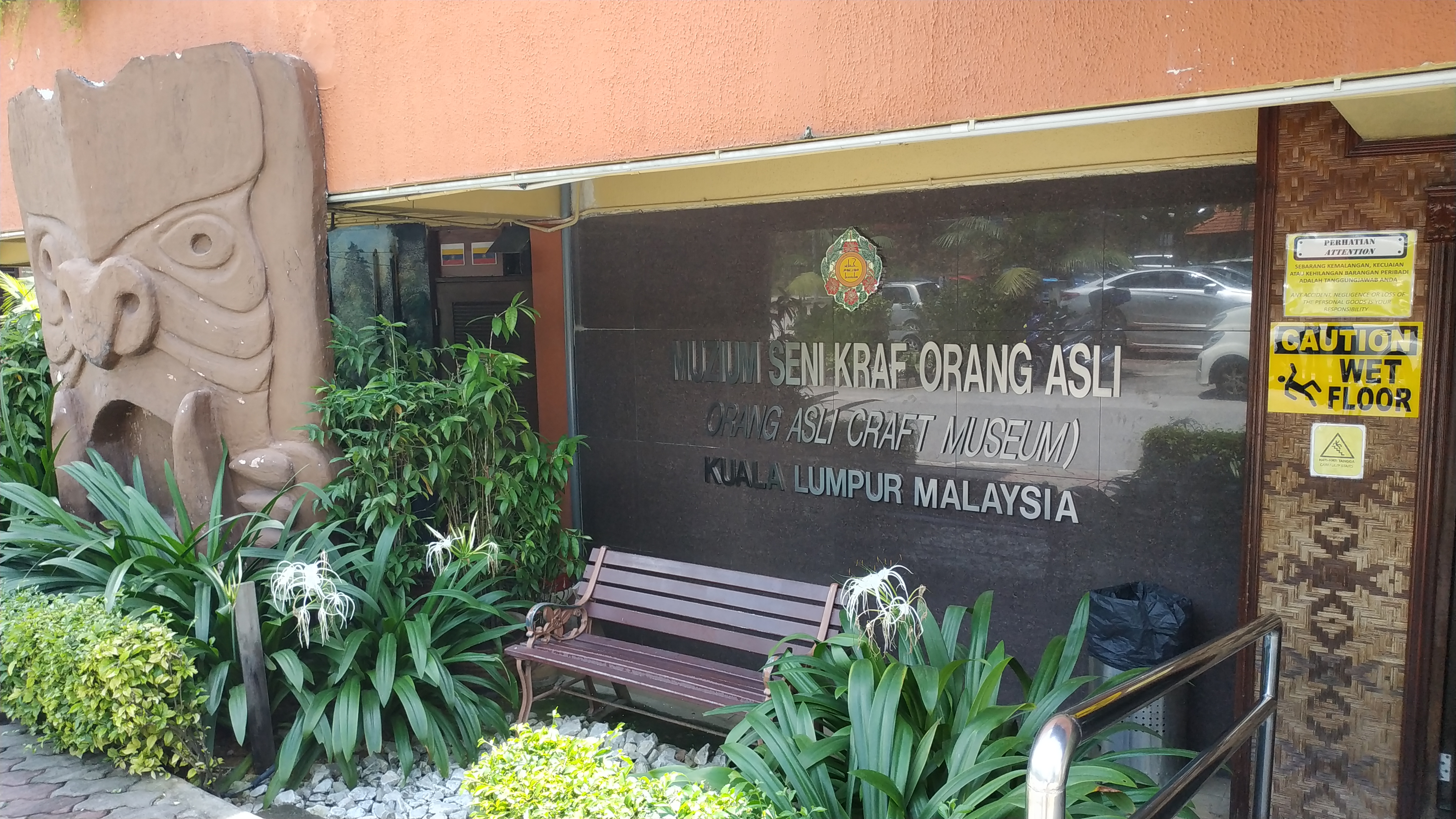
The smaller museum beside the big history stop
A national-history museum can leave you thinking in centuries. The Orang Asli Crafts Museum invites a different scale of attention: the relationship between an object, its maker and everyday life. The Department of Museums Malaysia places it near Muzium Negara on Jalan Damansara. Its subject is not a condensed version of the neighbouring history galleries. It brings craft, cultural practices and the meanings attached to objects into focus. If your KL itinerary already has towers, shopping and food, this is a chance to add a more thoughtful kind of discovery.
A basket is a beginning, not the whole story
Weaving is among the subjects in the museum's official introduction. Instead of looking for the most complicated pattern, begin with a practical question: what was this particular object made to do? Read its label for the material and use, then return to the object. Notice the opening, the rim and the relationship between its shape and its stated purpose. You are not being asked to identify every fibre by eye. Even a simple sketch of an outline can help you remember something more specific than 'there were beautiful baskets'.
Carved faces: resist the urge to invent a meaning
Carved figures and masks are another part of the museum's documented scope. The museum explains that craft can relate to beliefs and stories as well as daily activities. That makes the interpretation important. A striking expression is not enough evidence to call a mask a guardian, a spirit or a ceremonial object. Look for the community and context named beside it. Where the explanation is brief, keep the question open. The reward is not a collection of exotic-looking photographs, but a better understanding of why context changes what we see.
Follow the connection between making and living
The official outline also includes traditional housing, hunting and fishing equipment, musical instruments and personal adornment. Rather than treating these as a checklist, choose one connection to follow. How does a labelled tool relate to an activity? How does a personal ornament differ from something intended to be carried or used? Those are suggested questions, not claims about a specific item currently on display. Let the gallery tell you which comparisons are appropriate. An object that seemed modest on arrival may become the one you remember most clearly.
Keep people in the picture, not only objects
A craft gallery is not a reason to treat different communities as interchangeable, or to assume that present-day people live exactly as historical displays suggest. Pay attention to the names, places and dates that the interpretation supplies. If you make notes, write those beside the object rather than giving everything the same broad label. Visiting with children? Try a gentle exercise: each person chooses one object and explains what the label actually says, then names one thing they still wonder about. Curiosity does not need a made-up answer to be worthwhile.
Choose this visit for culture, not a guaranteed craft class
This guide describes a museum visit, not a booked demonstration, workshop or shopping experience. Check current access, opening notices and any activities directly with the museum. Ask about the route, seating or assistance if someone in your group needs it; proximity to another museum does not prove that every entrance is equally convenient. Our entrance photograph was taken in February 2020. It identifies the museum but cannot establish today's displays or access arrangements. Give yourself room to linger over fewer objects rather than promising to finish everything in a fixed number of minutes.
Give your KL day a different ending
After the visit, compare one thing you noticed with your companion: was it an object's purpose, a named community or a meaning you would otherwise have guessed incorrectly? That is a more personal souvenir than another list of landmarks. For the Singapore–KL journey, use our route guide and provide your dates, exact pickup and final destination, passenger and luggage details, child or mobility needs, stops, waiting and return plans for a confirmed vehicle and quote. Museum admission and local touring are separate unless agreed. Border queues, traffic and rest stops affect arrival; no fixed crossing time is promised. Official sources were checked on 16 October 2026.
Sources and image credit

Article FAQ
Does this repeat a Muzium Negara history visit?
No. It focuses on Orang Asli crafts, object uses and cultural context rather than the neighbouring museum's national-history gallery sequence. Confirm each museum's access separately.
Is a workshop included?
No workshop or demonstration is promised. Check any current activities directly with the museum.
Can I identify a mask's meaning by its appearance?
Use its specific label and community context. A striking expression alone is not evidence of an object's purpose or cultural meaning.