Trade the skyline for a different kind of movement
Kuala Lumpur can fill a camera with towers. For a different memory, make the subject something that refuses to stand still. KL Bird Park's walk-in setting lets you pay attention to birds in a planted, netted environment instead of treating every encounter as a posed photograph. The operator describes four zones, with free-flight areas among them. It is a managed park, not a claim that you have entered untouched wilderness. What makes the outing interesting is the chance to observe movement: walking, perching, preening or disappearing from view just as you raise the camera.
1. Start low: the path is not only for people
In the operator's Zone 1 introduction, peacocks and crowned pigeons are among the birds visitors may encounter. Before searching for the brightest wings overhead, look towards the edges of the path from a respectful distance. Watch how a bird pauses or changes direction. A young visitor can try describing its movement without needing to know the species: quick steps, a bobbing head, a long tail. If you want a name, check the park's identification information. Let the bird keep its space; never block its route or chase it into a better photograph.
2. Look up: a perch can be more interesting than a pose
Scan the branches rather than moving immediately to the next display. A bird that seems motionless may be turning its head, arranging feathers or watching activity below. Try holding your attention on one permitted view for a short while. The discovery is not a promised rare sighting, but the difference between glancing and observing. The park's World of Parrots offers another focus for visitors interested in these birds. Some are in separate exhibits, so do not assume every bird in every zone flies freely around visitors.
3. Pause by the water and change your viewpoint
The park lists Flamingo Pond among its attractions. Water gives the visit a different visual rhythm from the paths and branches: look for reflections, the spacing between birds and the shape of a neck against the background. You can make an ordinary family photograph more expressive by including a little of the setting instead of zooming in on every animal. Stay on the visitor route and let signs or staff determine the safe boundary. The aim is to notice how birds use their surroundings, not to get as close as possible.
4. Put the camera down and listen
Give the soundscape a moment of its own. Can you hear one call above the others? Does it seem close or distant? You need not identify it correctly to enjoy the question. With children, compare what each person noticed before consulting any interpretation. Avoid playing calls, making loud noises or offering food to attract an animal. If you want to attend an organised feeding or presentation, check the current programme and follow staff instructions; a keeper feeding birds in a historical photograph is not permission for visitors to do the same.
A small observation list beats a race around four zones
Pick two or three things you are genuinely curious about—movement on the ground, colours in the branches or birds beside water—and let those guide the walk. Someone who enjoys photography can look for the setting; someone who prefers stories can read the information; another person may simply enjoy the greenery. There is no need for everyone to compete over how many species they saw. Take breaks around your group's energy and the weather. The operator notes that programmes may change with conditions, so a satisfying visit should not depend entirely on one show.
What the photograph does—and does not—show
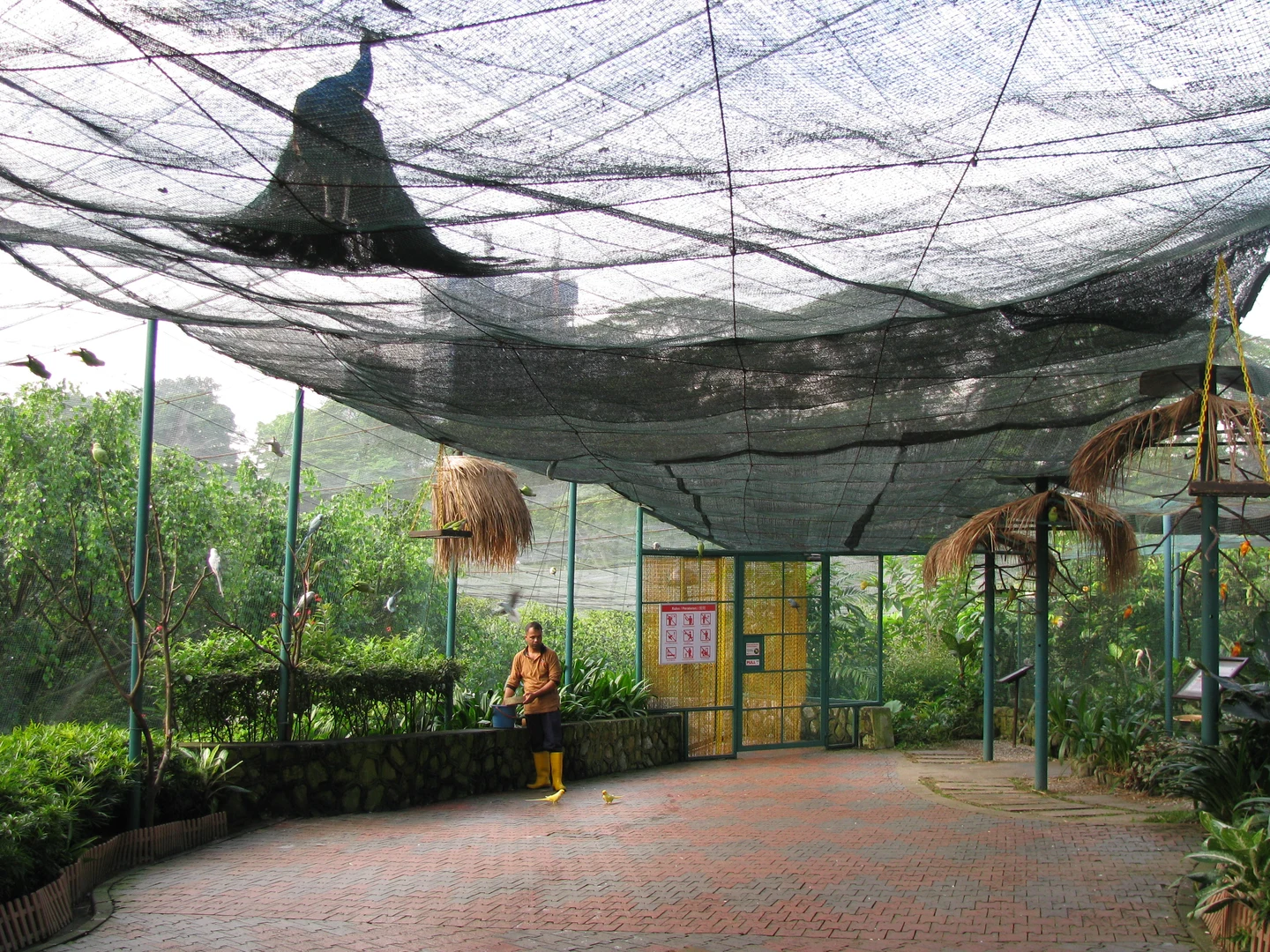
The 2012 photograph shows the entrance concourse under netting, with plants, birds and a keeper. It helps explain the managed aviary setting, but it does not establish today's route, exact exhibits, access arrangements or feeding schedule. Before travelling, check official opening and admission information, and ask the park directly about stairs, stroller access or assistance needed by your party. Wear footwear suited to the walking you actually plan, allow for heat and rain, and keep any hands-on activity subject to the park's rules.
Let this be a KL outing, not a promised arrival-day deadline
Choose the park because the experience appeals, then place it within your KL stay. A Singapore-to-KL transfer has variable border and road conditions; do not tie admission to a guaranteed crossing time. For a quote, send the travel date, Singapore pickup, KL hotel or agreed destination, passengers, luggage, child or mobility needs and return plan. Requested stops and waiting affect the arrangement and fare. Admission, guiding and local sightseeing are separate unless confirmed. This independent guide uses park information checked on 10 October 2026; it is not a personal visit account or an official park package.
Sources and image credit

Article FAQ
Is KL Bird Park only for taking photographs with birds?
No. Its walk-in areas also make it possible to observe birds' movement and surroundings. This guide suggests looking at paths, branches and water rather than relying on a posed encounter.
Does free-flight mean I can touch or feed the birds?
No. Follow the park's current rules and staff instructions. Free-flight describes the setting, not unrestricted visitor interaction.
Are all shows and bird encounters guaranteed?
No. Check the current programme; weather, animal care and operating conditions can affect what is available.